
The Staten Island Expressway is Staten Island's main artery.
Posted by Anthony Licciardello on
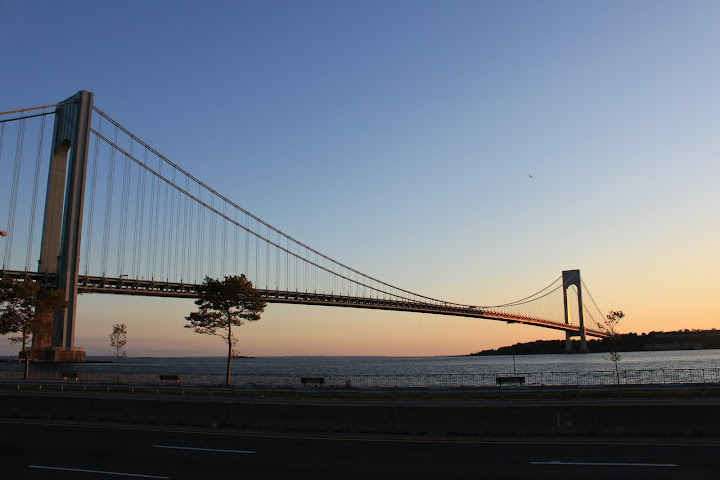
In April of 1957, plans were approved for a freeway which would be comprised of eight express lanes and four service lanes, running west and east through Staten Island. Construction began in 1959 on what would be known as the Clove Lakes Expressway. On January 30, 1964, the first section opened from the Goethals Bridge to Victory Boulevard. Ten months later, on November 19, the rest of the expressway had been completed--just a few days be fore the Verrazano-Narrows Bridge first opened.
Today, the Staten Island Expressway is undergoing many changes. The bus lanes that were created in 1998 began to be used as high-occupancy vehicles in 2008. Late last year, it was finalized that these lanes would be extended. Additionally, the removal of certain…
8308 Views, 0 Comments
 arrying 128 Americans. During the beginning of 1917, however, Germany sank several American ships heading toward Britain, knowing full well that it would result in the United States entering the war. As you can imagine, that was the straw that broke the camel's back.
 rrows. This park contains about ten acres of park-land and about two acres of water. Von Briesen Park was named after Arthur Von Briesen (1843 – 1920). This park used to hold Arthur Von Briesen's estate before he passed away. He bought this property in 1901 as a summer home, which he named "Gernda", a German term for "wishing to be there".
 During the nineteenth century, much of Staten Island was used as a summer resort for its neighboring boroughs. This was especially so closer to the shore, where people had access to the beach. By the beginning of the twentieth century, in 1906, an amusement park opened on the eastern shore of Staten Island. The Happyland Amusement Park, located in South Beach, was a widely anticipated attraction-so much so that at the time of its opening, thirty-thousand people traveled to Staten Island for its grand opening.
 Kaltenmeier Playground into three separate sections. The main lot, which is below Virginia Avenue, is a small parcel of land that is only about half an acre in size. This section of the park has been transformed from an empty lot into a local play area for the children of the community. The other two sections, which are both located above Virginia Avenue and separated by Anderson Street, are natural forests that have been left alone. Altogether, the three sections add up to about one acre of land.
 During the late seventeenth century and early eighteenth century, a single-room, half-timbered Dutch Colonial home was built at 2 Hylan Boulevard. From its construction up until 1775, many additions were made to the house. Between the years of 1725 and 1750, a second room was added to the house. During the years between 1750 and 1775, another addition was made to the house, giving it an L-shape.