
Open house this Saturday: Rare find 6 over 5 home for sale in New Dorp
Posted by Anthony Licciardello on
211 Titus Ave 11AM-1PM
 If you're in the market for a home that provides a considerable amount of income from a two or three bedroom apartment with a location and price that is unmatched in its price segment… This is your home.
This impeccably maintained home has great features like hardwood floors, vaulted ceilings, updated exterior and manicured landscaping. There is also a full finished basement with private access from both apartments, which is a very rare convenience. So, even if you decide to rent the first floor 2 bedroom apartment, you can have full private entry from the larger second floor 3 bedroom unit. It is truly a rare opportunity.
See the complete listing for 211 Titus Ave.
Contact Mary Ann Benevento – DeMagistris of…
1607 Views, 0 Comments

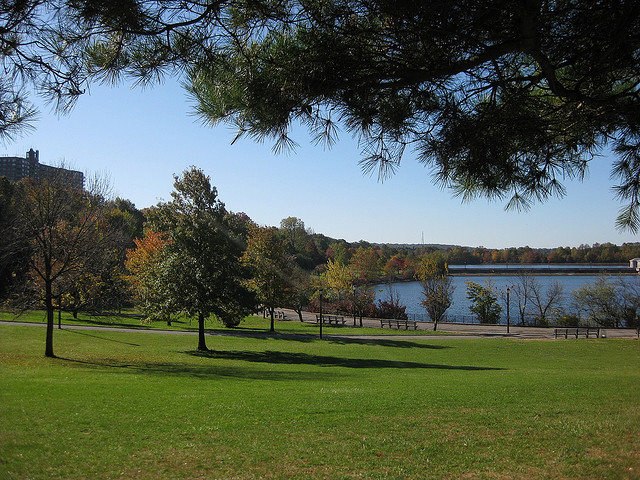
 e Grasmere section, is the only freshwater pond on Staten Island that has been deemed suitable for swimming. Prior to this, however, Brady's Pond was popular for another reason-it was believed to be haunted. In fact, it was not a pond at all and went by a completely different name at the time: Haunted Swamp.
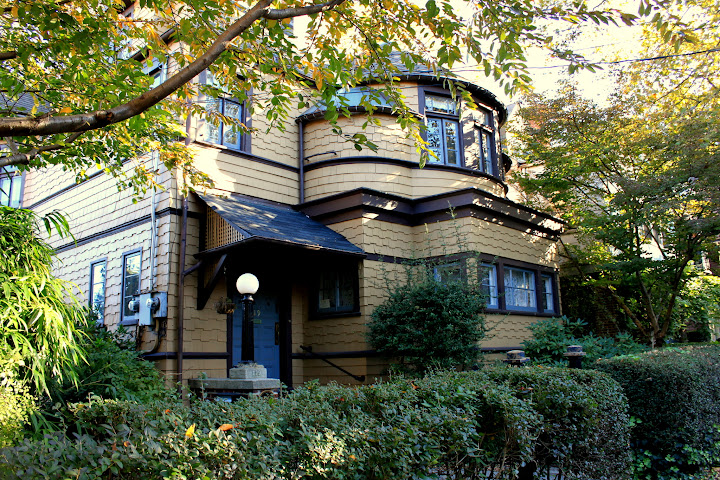 Between the years of 1835 and 1987, dozens of buildings were constructed at the northern tip of Staten Island. Over the years, architectural styles changed and the buildings began to stand out due to their individuality. Having been well-kept over the years, a hearing was held by the Landmarks Preservation Commission to designate the buildings, as well as their boundaries, as a Historic District. On July 19, 1994, the historic district was established as the St. George/New Brighton Historic District.
 The latter half of the nineteenth century saw the popularization of Colonial Revival architecture, which lasted half-way into the next century. In 1890, Edward A. Sargent constructed a Colonial Revival-style home, at 103 St. Marks Place, for broker Frederick L. Rodewald. A few years later, in 1894, the home that he had constructed in the Gothic Revival-style at 83 St. Marks Place was extended and altered much, where it became a Colonial Revival-style home. At the turn of the century, between 1905 and 1906, lumber merchant George W. Allen had four of these types of houses constructed. Samuel R. Brick, Jr. built the first three, which were located at 29, 31, and 35 St. Marks Place. The last was designed by Edward A. Sargent and was located at 27 St.…
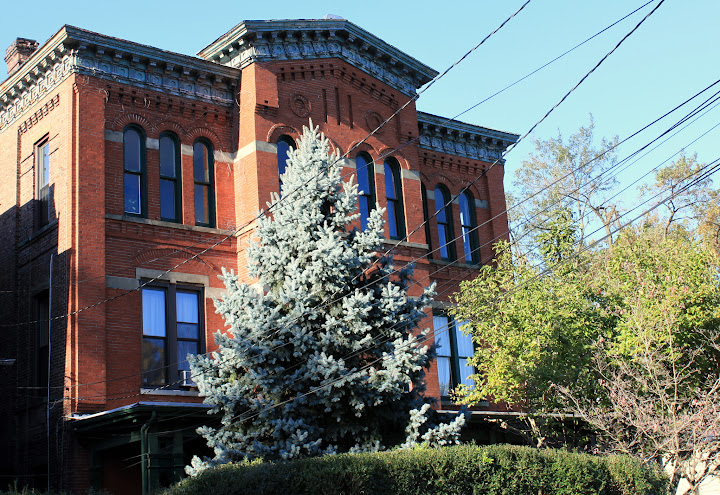 From 1880 until the turn of the century, the Shingle Style had become increasingly popular. These houses were influenced by the English Colonial, which were common from the early seventeenth century up until the middle of the nineteenth century. From 1886 until 1907, one dozen Shingle Style houses were constructed within the St. George/New Brighton Historic District. The first of these houses, built in the first couple of years for the wealthy banker, Anson Phelps Stokes, were located at 48, 52, and 56 St. Marks Place. Three more houses were built for the same man in 1890 at 7-8, 9-10, and 11 Phelps Place. These houses were designed by architect Douglas Smyth.
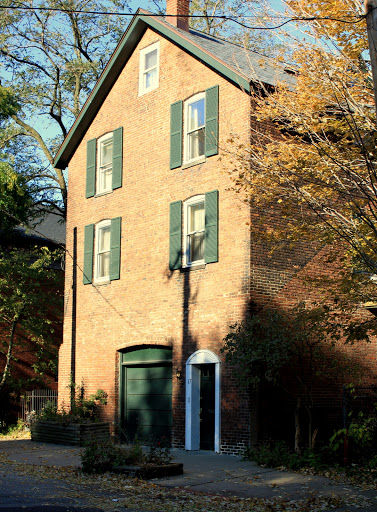
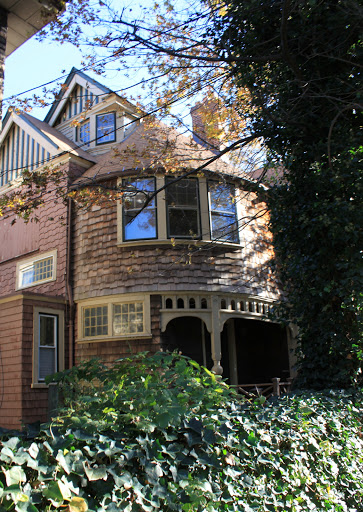 Many houses are solely vernacular in architectural style. Four of these, which were built between the last half of the nineteenth century and the first quarter of the twentieth century, are located within the St. George/New Brighton Historic District. The first home to be built in the District using local resources was erected between 1853 and 1874. It is uncertain whether this home, which is located at 17 Carroll Place, was built for Henry P. Robertson, who owned the oldest house in the District, or James Wilkinson, who was part of Crabtree & Wilkinson silk dyeworks.

